Storyteller owns what changes, why it changes, and the character state on either side of the moment. It compiles that approved change into performance, camera, and provider-neutral Direction, then renders the consuming model's Dialect and generates through the shared Canvas graph and execution system without exposing generic node authoring or rewriting the story.
EXAMPLE · SCENE 04After the first defeat
EVENT + CHOICEShe chooses to returnThe reason for change
EXAMPLE · SCENE 11Before the rematch
Externalbruisinghealing marks
Innerfearresolve
Knowledgeher own weaknessher opponent's rhythm
Relationshipdistancetrust
Discover through conversation. Review as a proposal. Approve into canon. Confirm it through media.
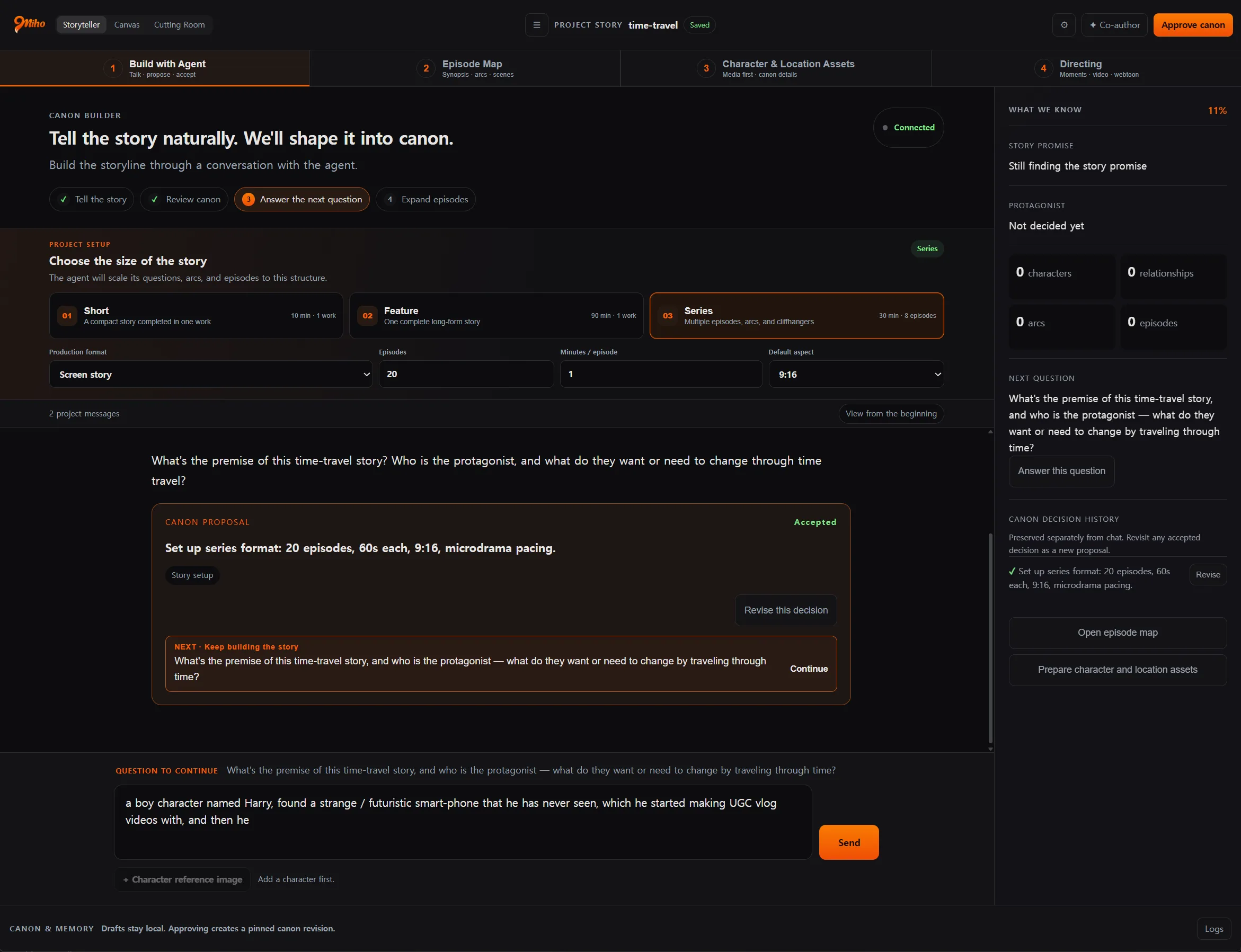
Tell the story naturally. It comes back as a proposal.The agent asks one question at a time. Each answer returns as a proposal to accept or revise, and only an accepted proposal becomes canon. The panel on the right counts what the story actually knows yet.
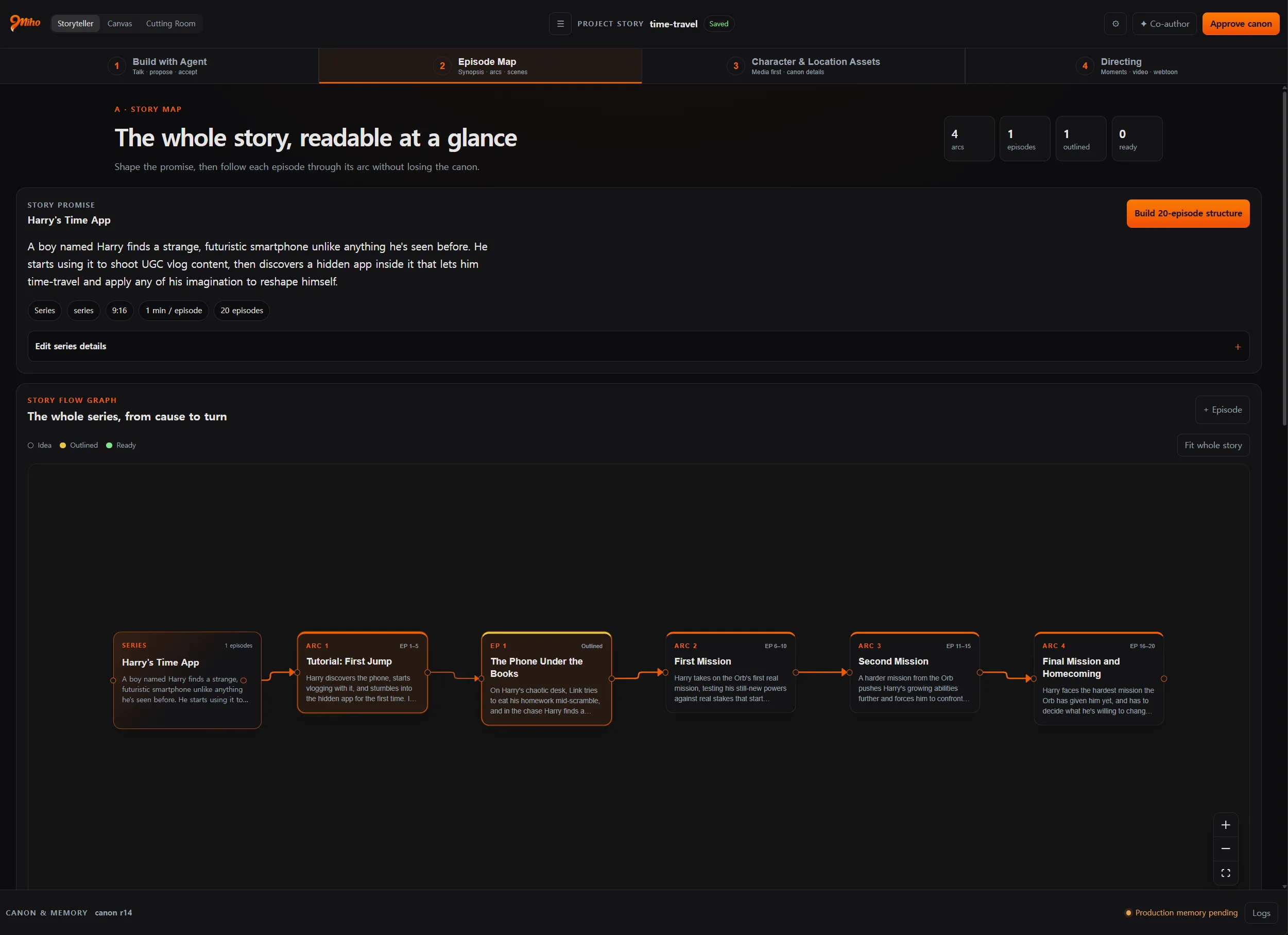
The whole story, readable at a glance.The accepted premise becomes a story promise, then arcs and episodes. The flow graph reads the series from cause to turn, with every episode marked idea, outlined, or ready.
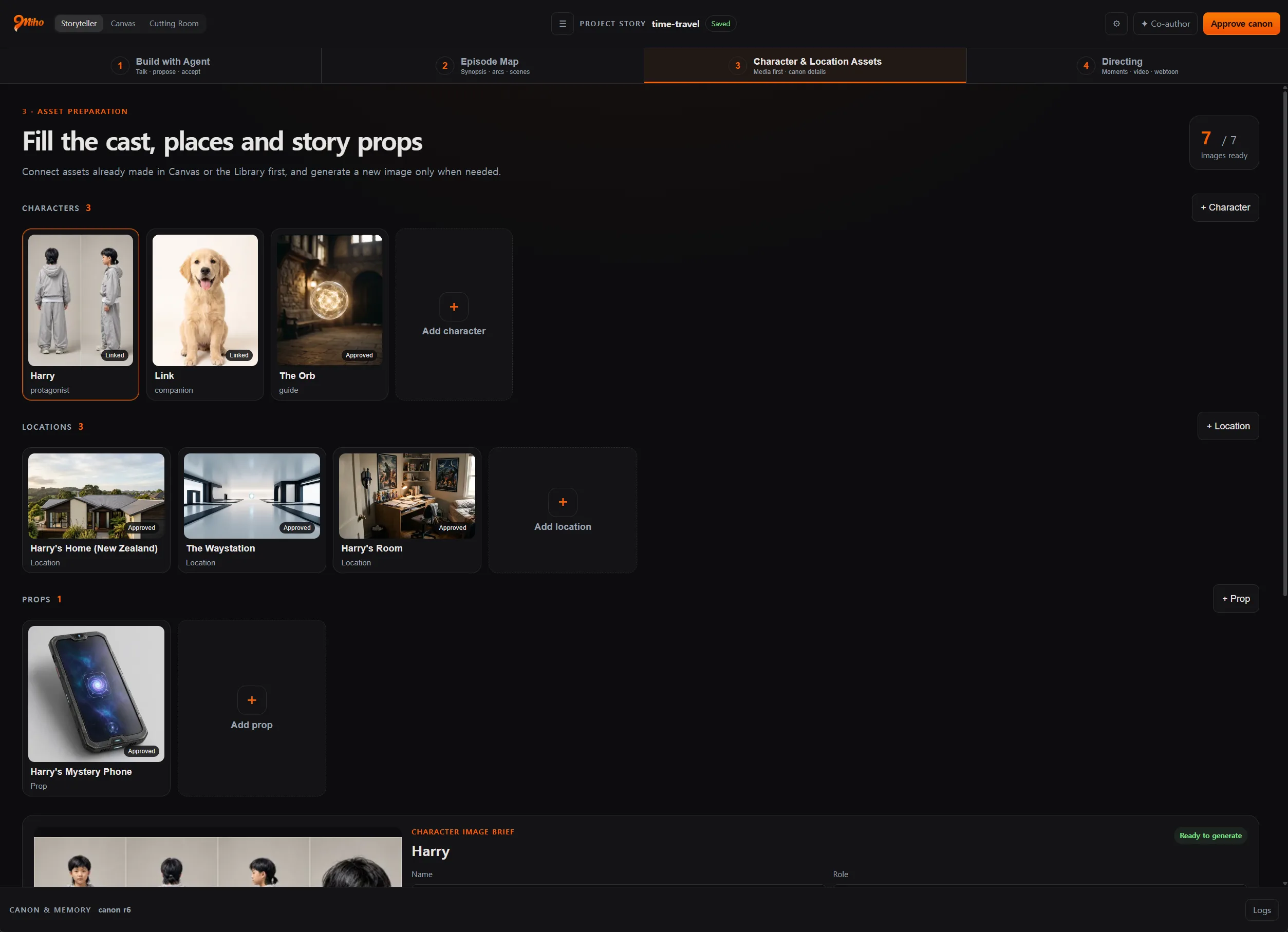
Cast, places and props get a pinned identity first.Assets already made in Canvas or the Library link in, and a new image is generated only where one is missing. Nothing is directed against an unapproved reference.
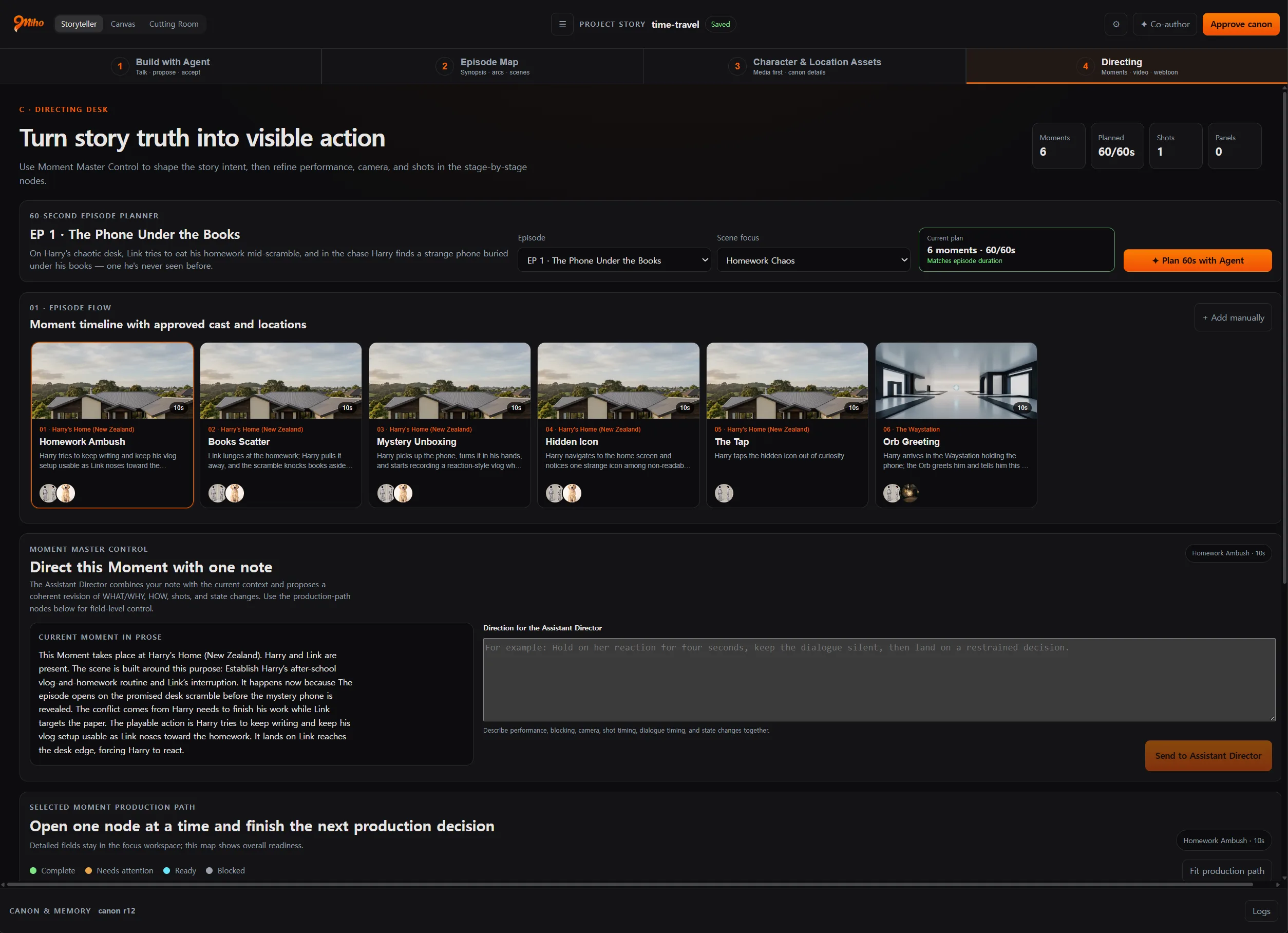
Story truth stays fixed. Only the HOW is designed.The agent proposes a sequence of moments against the approved cast and locations, timed to the episode length. You choose the sequence; the moment's WHAT and WHY do not move.
Four dimensions of changeRecord visible condition, inner state, knowledge, and relationships before and after each Moment, together with the event that caused the change. A story bible holds the facts that stay fixed; this holds when each one changed, and why.
From WHAT + WHY to HOWKeep the approved event and reason intact, then express them through performance, blocking, camera, light, and sound.
Emotion the camera can readTurn abstract feeling into gaze, breath, posture, hand action, rhythm, and distance that can be performed on screen.
Creator-approved canonReview agent proposals before they become canon. If the story changes later, existing work is never silently overwritten.
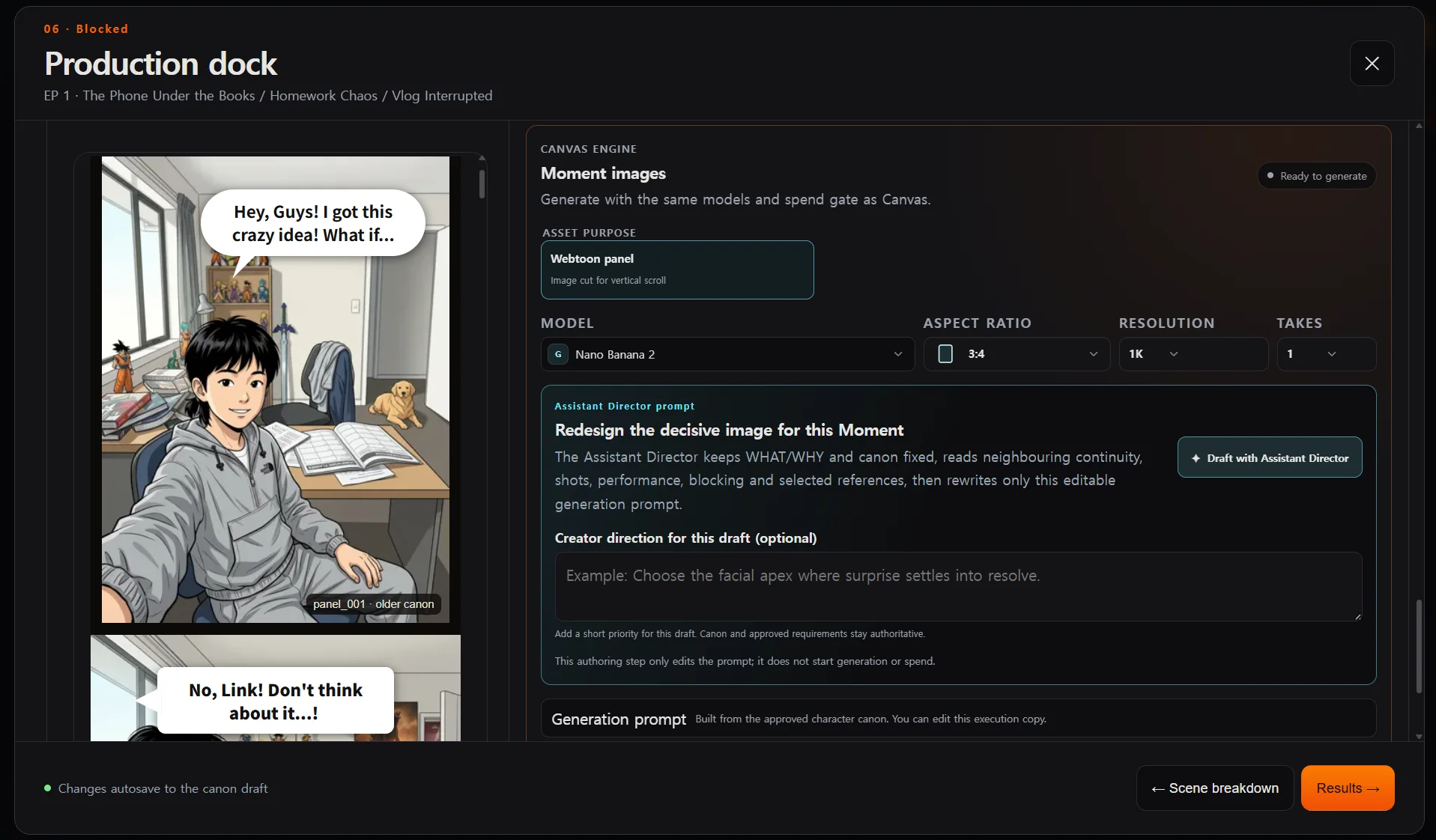
WEBTOON PRODUCTION · AVAILABLE NOW
The story contract can become a vertical panel, too.
Choose one approved Moment and compose its visible beat, framing, pose, gaze, continuity, and exact lettering as a panel contract. Storyteller then uses the same model catalog, spend boundary, Take revisions, and lineage as the rest of 9Miho.
Plan panel pacing across an Episode without launching a hidden render batch.
Direct and generate one selected panel with explicit model, aspect ratio, resolution, and Take count.
Keep each approved panel tied to its exact Canon contract, and flag it only when a relevant Moment, reference, or approved output changes.
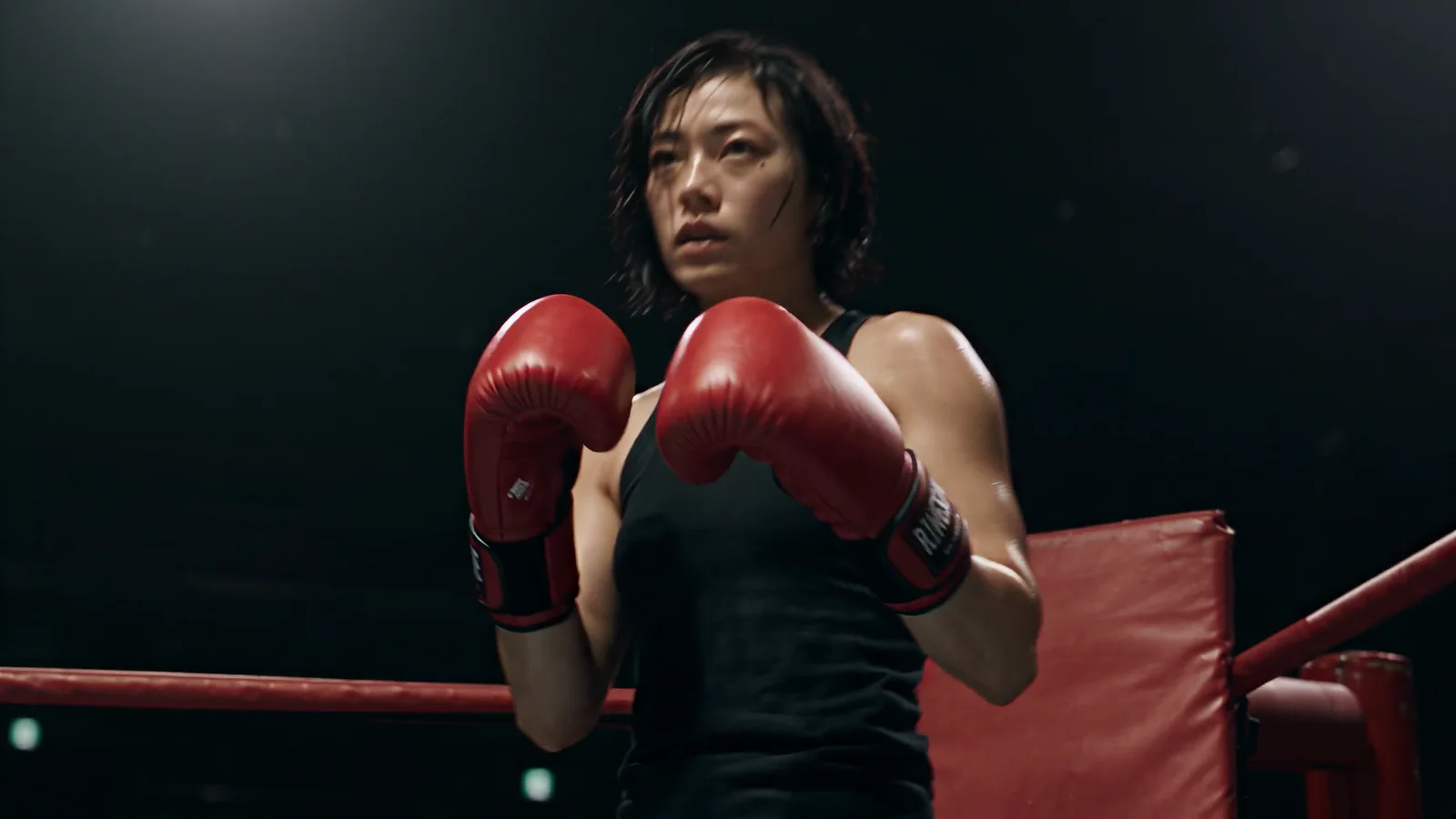
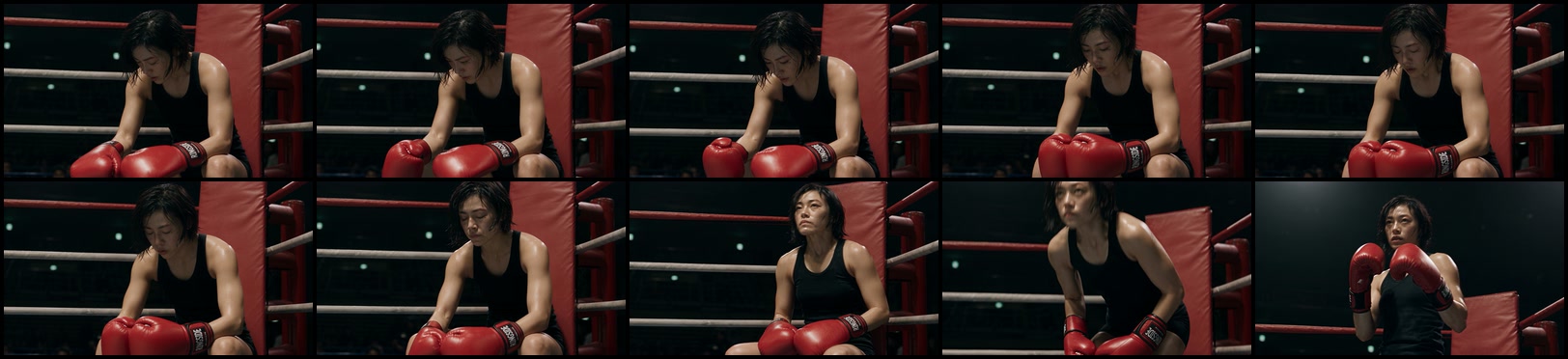
Exhaustion becomes controlled resolve through breath, gaze, posture, and one deliberate glove bump. The state going in, the beat that turns it, and the state coming out were declared in the Direction before the shot ran.
Performance arcDirected change of statePinned character revision
One More Round
A boxer moves from shock and unstable breath to quiet resolve through a restrained performance arc in one uninterrupted shot.
The first shot can be luck. Production starts at the second one, and everything that makes the second one possible has to be in place before it exists.