AI PRODUCTION · LONG FORM · SHORT FORM · MICRODRAMA

Writing a prompt and praying is not directing.

9Miho builds the story, holds the assets that belong to it, and designs the shot down to the performance and the mood. The model executes that design; it does not invent it.

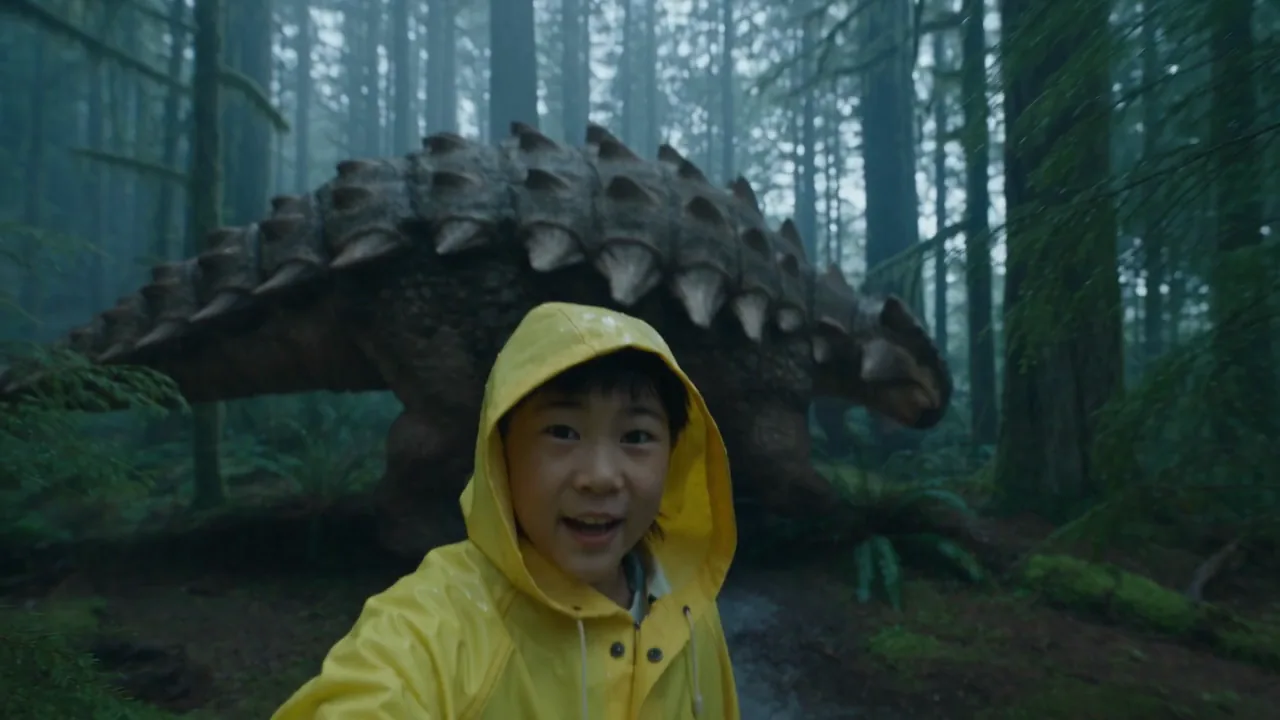
A child in a yellow raincoat turns toward the camera on a rainy forest path, an armoured dinosaur moving behind them.
StoryWhat changes here, and why
DirectionPerformance · mood · camera
TakeRegistered with the run behind it
Seedance 2.5 · Directed in 9Miho · 00:10
Skip the cinematic introduction
Made in 9Miho
MADE HERE

The model's job ended at the render. Everything before and after it is ours.

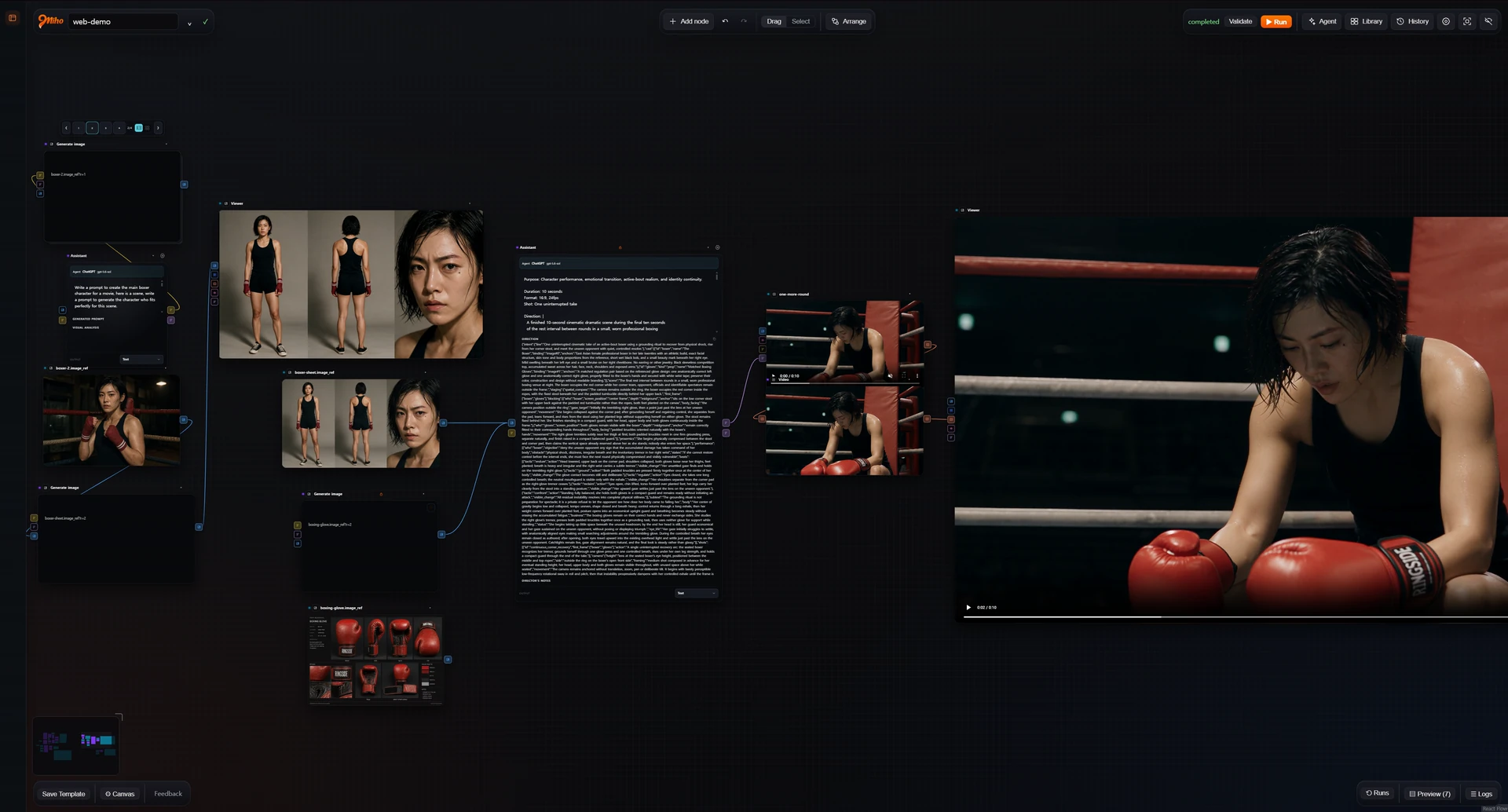
This shot was fixed as a moment in a story first, then lowered as a Direction that already carried the performance and the mood, and registered as a revision the moment it existed. Two weeks from now, the run behind it still opens.

A moment in a storyDeclared performanceA run you can reopen
HOW A SHOT GETS MADE

Some of it has to be decided before a prompt exists, and some of it only starts once the shot does. That is the part 9Miho does.

  1. 01

    You cannot direct with a prompt.

    Directing is a set of decisions: what this moment does in the story, what the character wants, how they carry it, where the camera is.

    A prompt is one sentence. Past the third adjective the decisions start cancelling each other out. So you write, run, look, rewrite. Forty times, and you keep three. That is not directing, that is fishing.

  2. 02

    A story is what gives you something to direct.

    Looking at one shot on its own, there is nothing to decide. The decisions come from knowing where the moment sits and what carried over from the shot before it.

    Storyteller holds that: the state before the moment, the event that changed it, the state after, and your approval before any of it becomes canon.

    So "exhausted, still holding" stops being an adjective you retype and becomes a fact the shot inherits. It is also how a character's change travels from one shot to the next instead of being reinvented in each.

    Length does not change that structure. A sixty-second microdrama, a short-form series, a long-form run of episodes — each lays out the same way: arcs, episodes, and the moments inside them.

    Direct the story and the change in it
  3. 03

    A shot is designed when the performance and the mood are decided too.

    A Direction is declared intent, not a prompt string. The performance, how far the expression goes, the light and the air in the frame, what the camera is doing — each is stated on its own axis, then lowered into the dialect the model you chose actually reads.

    The same character, the same place, the same prop enter the shot at the revision you approved. When revision 4 appears, a shot authored against revision 3 stays on revision 3.

    Which is why a re-run is not a re-run of everything. Only the branch hanging off the input you changed goes back through, and the takes you already approved drop out of the spend.

    Work the graph directly
  4. 04

    The shots you kept leave as one episode.

    Whether you post it or deliver it, a finished piece is more than one clip. The takes you kept go onto a timeline, through colour-managed grading, and out as an episode.

    You can render the final cut here, or hand the episode to a master suite. When you hand it over it goes as an OTIO timeline carrying a 10-bit mezzanine and a per-clip CDL — which is the difference between the edit receiving a timeline and receiving a folder.

    Edit, grade, and the handoff
WHERE IT SHOWS FIRST

A one-minute vertical episode has nowhere to hide.

Eight shots, maybe ten. If the character resets in shot seven, the viewer catches it on the spot — there is no runtime to bury it under and no B-plot to cut away to. That is why microdrama is where 9Miho starts, and why what holds up there holds up at length.

Explore the microdrama workflow
Microdrama is the stress test. Long form is the same structure, with more of it.
THE MODEL IS YOURS TO CHOOSE

None of this is pinned to one model.

9Miho bundles no model weights. A local ComfyUI stack, an on-demand endpoint, a paid provider API — you configure it, and the provider bills you directly.

A Direction is written once as declared intent and lowered to the dialect the model you picked actually reads. When a better model ships next month, the shot description is not the thing you rewrite.

We do not resell generation, so making you generate fewer times costs us nothing. That is why the product is built to re-run only what changed.

You are not locked to a model, and you are not locked to us. The media stays files on your own disk, and what leaves here is a format your other tools already read.

See the supported model families
AGENT ACCESS · MCP

Let Claude or Codex work inside the same production system.

The public 9miho-skills pack gives Claude and Codex task triggers. Connect MCP and the agent can read the live catalog, work with exact asset revisions, plan against Storyteller context, build and validate Flows, and follow the resulting lineage. Available guidance always follows the running installation's list_skills() response.

START IN MINUTES

Desktop handles the machinery.

Kumiho Desktop installs the correct 9Miho bundle for your platform, starts it, checks its status, and manages future updates.

KUMIHO DESKTOP

Install for your platform

Your detected platform is highlighted in fox orange. Every other option remains available.

v0.4.0

Choose Windows, macOS, or Linux.

Windows

Windows 10/11 · x64

Download .exe46.9 MiB
Direct installers · No GitHub sign-in · No automatic download
  1. 01

    Get Kumiho Desktop

    Download the latest Desktop release for Windows, macOS, or Linux.

  2. 02

    Install 9Miho

    Open the 9Miho card and choose Install. Desktop selects and verifies the platform bundle.

  3. 03

    Start creating

    Launch 9Miho from Desktop. Return to the same card whenever an update is ready.

Bring the execution you need

9Miho can boot without generation credentials. Add your own provider profiles or configured execution endpoints when you are ready to run a model.

The questions that come first.

What is 9Miho?

9Miho is an AI video production system that carries a character's external and internal change through the story. It has three rooms: Storyteller manages narrative and character state, Canvas generates takes across models on a typed graph, and Cutting Room cuts and grades the approved revisions into an episode, then renders the final cut or hands it to a master suite.

Why install it through Kumiho Desktop?

Desktop is the supported front door: it selects the correct platform bundle, installs it, starts it, reads health and version state, and offers updates without requiring a command-line setup.

Do I need provider keys?

Not to open Storyteller and the production workspace. A generation needs a compatible configured provider profile or execution endpoint. Provider API, GPU, electricity, and cloud infrastructure costs remain separate.

Does 9Miho automatically substitute another model?

No. A Variant names an exact provider, model, operation, ports, settings, auth surface, and cost hint. If that Variant is unavailable, 9Miho reports or pauses it instead of silently replacing it.

What uses does the local edition permit?

Consult the license included with the current 9Miho release for permitted uses. Managed cloud and team capabilities are separate, and third-party model, hardware, and infrastructure terms and costs still apply.

Does one Direction create a whole multi-shot campaign?

Not today. One Direction currently lowers to one consuming generation. It restructures declared intent for that model, but does not invent shots, fan out paid jobs, or run automatic Vision retry loops.

Can Claude or Codex operate 9Miho directly?

Yes. The public 9miho skills tell Claude or Codex when to call 9Miho, while MCP exposes the live catalog, pinned asset revisions, lineage, Flows, Storyteller, and Runs. The running installation's list_skills() response is the source of truth for available guidance. Canon approval is a separate explicit operation, and a paid Run waits for an itemized confirmation in 9Miho.

Is Direction just an agent skill prompt?

No. Skills teach the Agent how to operate 9Miho. The Assistant's Direction handler separately loads the full medium-specific, content-addressed craft corpus and the Direction schema before it writes. That corpus covers acting, staging, cinematography, image craft, and production discipline; its digest versions the resulting cache.

Is 9Miho another ComfyUI graph editor?

No. ComfyUI can power compatible local model families under the hood, while creators work with Storyteller's production context and catalog-backed image and video operations. The Canvas engine connects typed ports, settings, asset revisions, and lineage alongside paid API models. 9Miho bundles no model weights, so endpoint setup is still required where applicable.

Let the next scene remember the last one.

The first shot can be luck. Production starts at the second one, and everything that makes the second one possible has to be in place before it exists.